
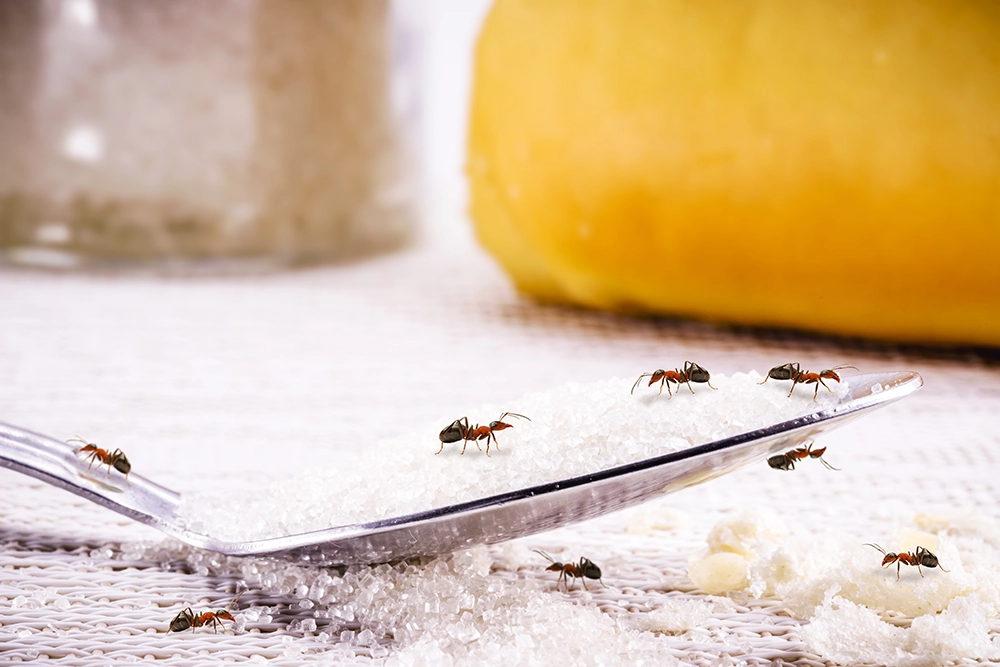
Ants are common household invaders, and once they find food or moisture, they’re quick to bring in the rest of their colony. Even though professional pest treatments are the most dependable long-term fix, there are several natural methods that can help you control minor infestations or keep ants away between visits.
While these DIY remedies can offer temporary relief, ants are persistent and resourceful creatures, so they may not be enough. Still, with consistent effort and a few natural ingredients, you can make your home less inviting.
Home Remedies to Help Keep Ants Away
1. Vinegar and Water Spray
A simple mix of vinegar and water can help deter ants naturally. Combine equal parts of both in a spray bottle and apply it to ant trails, doorways, and countertops. The sharp smell removes the pheromone trails ants depend on to find their way back.
2. Lemon Juice Barrier
The acidity in lemon juice helps mask the scent trails ants leave behind. Apply fresh lemon juice or a diluted mixture to window sills, baseboards, and around kitchen areas to discourage ants from entering.
3. Baking Soda and Sugar Blend
This classic remedy uses ants’ attraction to sugar to your advantage. Mix sugar with baking soda in equal amounts and place it in small containers where you’ve noticed ant activity. The sugar lures them in, while the baking soda disrupts their internal systems.
4. Food-Grade Diatomaceous Earth
Sprinkling food-grade diatomaceous earth where ants travel can help eliminate them. This fine powder dries out the ants’ exoskeletons, leading to dehydration. Always choose the food-grade version to ensure it’s suitable for use around people and pets.
5. Essential Oils
Essential oils such as peppermint, eucalyptus, and tea tree oil have strong natural scents that ants avoid. Add a few drops to water in a spray bottle and mist along door frames, vents, and other likely entry points.
6. Cinnamon
Ants dislike the strong smell of cinnamon. Sprinkle ground cinnamon or leave cinnamon sticks in areas where ants are often seen. The scent acts as a natural deterrent that helps interrupt their movement patterns.
7. Borax Bait
Borax can be an effective natural solution when mixed with sugar. The sweet smell draws ants in, and they carry the poisoned mixture back to the colony, spreading it to others. Be cautious when placing borax, never place bait in areas accessible to pets or children.
8. Coffee Grounds
Used coffee grounds are another common household material that can deter ants. Spread them around the foundation of your home, garden beds, or areas you’ve seen ants enter. The strong odor masks scent trails and keeps ants away.
9. Cornmeal
Ants will collect and eat cornmeal, but they can’t digest it. Over time, this can help reduce the colony’s numbers. Place small piles of cornmeal near entry points and ant trails.
10. Soap and Water Spray
A quick, inexpensive way to kill ants on contact is with dish soap and water. Mix a few drops of dish soap in a spray bottle and apply it directly to visible ants and along their trails. The soap breaks down their protective layer, causing dehydration.
11. Clove Oil
Clove essential oil is a potent natural ant repellent. Combine it with water and spray it into cracks, along baseboards, or any areas where ants tend to enter. Its strong scent discourages ants from staying in treated areas.
12. Chalk
Drawing a line of chalk at entry points may temporarily keep ants out. The powdery line interrupts their scent trails and confuses their navigation. While not a permanent fix, it can help reduce numbers short-term.
13. Ant Repelling Plants
Certain aromatic plants, including lavender, basil, and mint, naturally repel ants. Planting them near doors, windows, and outdoor patios can create a barrier that helps prevent these pests from getting too close to your home.
Don’t Let Ants Come Back
Natural ant control methods can help reduce the problem temporarily, but they often don’t reach the root of the infestation, which is the colony itself. If ants continue to reappear, it may be time to call a pest control professional.
A trained exterminator can identify the specific ant species, locate their nesting sites, and apply treatments designed to eliminate the entire colony. Professional prevention plans can also seal entry points and stop future invasions before they begin.
If you’re tired of battling ants on your own, reach out to our experienced team. We’ll take care of the infestation quickly and effectively, so your home stays pest-free all year long.